
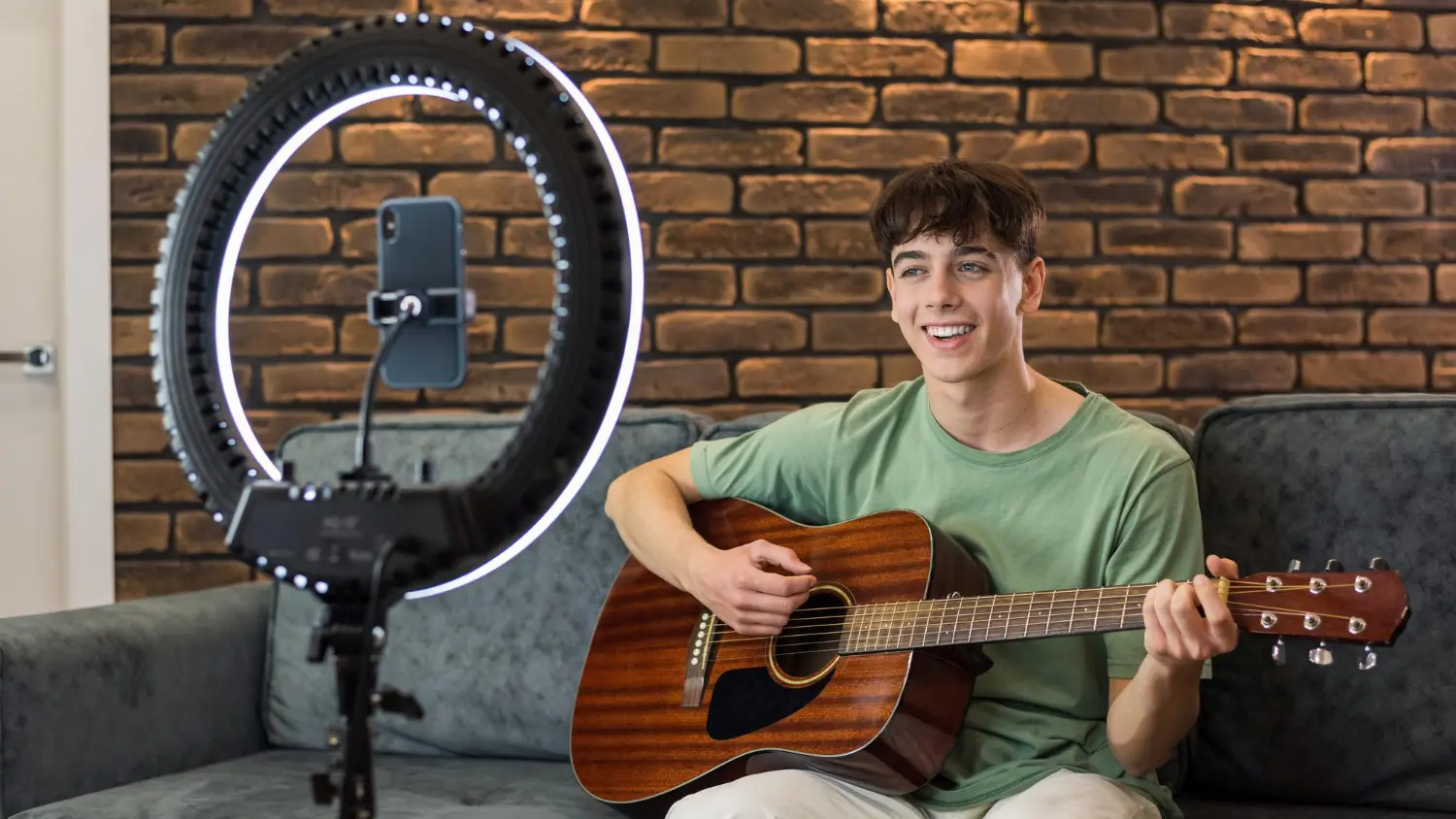

Think the influencer phenomenon is brand new? Not quite. Sure, TikTok and YouTube superstars feel very 2020s, but their roots trace back decades. Remember MTV’s reality shows? (If not, ask your cool older cousin.) MTV practically invented making ordinary people into entertainment. Shows like The Real World (debuted 1992) pioneered the format of filming everyday folks and editing their lives into juicy unscripted drama. It was raw(ish), real(ish), and wildly addictive. Sound familiar? Swap the TV for a smartphone, and you’ve basically got the blueprint for today’s vlogs and TikToks. Social media influencers are reality TV’s hyperactive grandchildren.
MTV also got young audiences hooked on short, fast-paced content – think music videos and quick-hit shows. That “flashy cuts and short attention span” style foreshadowed today’s 15-second TikToks. So while Gen Z might feel like TikTok birthed the influencer era, the seeds were planted when Gen X and Millennials were glued to cable, counting down the TRL top 10. The medium’s changed (smartphones instead of TV), but the idea of everyday people achieving celebrity status by sharing their lives? That’s been brewing since camcorders and chunky TV sets. We’re just doing it on an ultra-fueled, global scale now.
One huge difference today is democratization. Becoming famous used to require auditions, agents, Hollywood luck – or at least a spot on a reality show. Now? If you’ve got a phone and Wi-Fi, you’re in the game. It’s shockingly accessible. No wonder literally tens of millions are giving it a shot. In fact, over 50 million people worldwide now consider themselves content creators. Most are just amateurs posting for fun, but a couple million are actually earning enough to call it a full-time job. Think about that next time you scroll, behind every dancing teen or tech reviewer or makeup artist on your feed, there’s an aspiring influencer hoping to hit it big. The result? A massive creator ecosystem where anyone (in theory) can become the next Charli D’Amelio or MrBeast.
It helps that audiences are hungry for “real” content. Polished sitcoms and perfectly scripted movies are cool, but there’s something refreshing about a normal person talking to a camera from their bedroom. It feels authentic – like a friend letting you in on their life. And because literally anyone can start a channel or account, we get to see diverse voices and niches you’d never find on network TV. Love extreme ironing? Jellyfruit candy reviews? Lithuanian folk metal music? Whatever your vibe, there’s probably an influencer for it. This long tail of content means viewers can connect with very specific personalities and communities. It’s less top-down broadcast, more corner store bulletin board. Quirky? Yes. Democratic? Also yes.
Let’s talk data, because behind the hype, there’s serious viewership and money in this game. Consider traditional TV vs. online video: young people today are firmly Team Internet. A recent survey found that viewers aged 13–24 now spend 21% of their entertainment time watching online video (YouTube, TikTok, etc.), compared to just 16% on old-school TV shows. That’s right – social media has overtaken TV in the coveted youth attention economy. In fact, YouTube recently became the first streaming platform to capture over 10% of total TV viewing time in the U.S., according to Nielsen. Translation: even when you count all the cable channels and streaming services, YouTube is slicing off a huge chunk of the pie.
It’s not just time – it’s people. Two-thirds of U.S. teens follow influencers, vastly higher than the ~30% of adults who do. And they don’t just follow; they engage like crazy. Social media creators’ posts get on average 2–3× more views and 12× more comments than content from traditional celebrities on the same platforms. Why? Perhaps because these online personalities feel more approachable. I’ll touch on this later. The trust factor is huge: Millennials say social creators get them – 40% of millennial fans even feel their favorite YouTuber understands them better than their real-life friends do. I mean lets be real. Sometimes we do feel like our internet idol is the most relatable person to exist.
And where eyeballs go, dollars follow. Brands have noticed that Jake and Logan Paul might sell a product better than primetime TV ads. The result: a booming influencer marketing industry that’s pouring money into sponsored TikToks and Insta posts. How big? Try $32 billion by 2025 globally, up from just $1–2 billion a decade ago. Yup, that’s a thirty-fold increase – marketers are shelling out serious cash for collabs and #ads with creators. It’s to the point that social media is now the largest advertising channel in the world, even bigger than search ads. So next time you see your favorite TikToker raving over the latest snack box or skincare product, remember: this is a multi-billion dollar slice of the economy.
Oh, and in case you’re curious about the global picture: the influencer craze is everywhere. Not just a U.S. thing. Countries like Brazil are huge influencer hotspots (15.8% of Instagram’s influencers are Brazilian!), and in markets like China, social media stars drive massive live-stream shopping sales. It’s a worldwide wave.
Are Influencers the New Celebrities?
Here’s a fun thought: ask a 15-year-old who their idol is. Odds are, you’ll hear names like MrBeast or Charli D’Amelio or KSI – not Tom Cruise or Julia Roberts. Wild, right? In many ways, influencers are this generation’s celebrities. Don’t take my word for it – a Variety survey found that the five most influential figures among American teens were all YouTube stars, outranking Hollywood A-listers in teen appeal. And this was back in the mid-2010s; that trend has only intensified. Google’s research likewise confirmed that Gen Z and Millennials trust and relate to YouTube creators far more than traditional celebs. They see influencers as occupying a sweet spot between a star and a friend. They’re aspirational, yet approachable.
Consider the scale of some of these digital followings. MrBeast (Jimmy Donaldson) has over 400 million YouTube subscribers – that’s more than the Super Bowl’s TV audience, and more than the population of the entire North America! Meanwhile, top TikTokers like Charli D’Amelio soared to 100 million followers while still in their teens. These are numbers most Hollywood actors or pop singers never reach in terms of dedicated fan count. And the engagement is next-level: when a big YouTuber drops a video, within hours they can rack up tens of millions of views and a comment section that looks like a packed stadium of screaming fans. Traditional celebs, on the other hand, often feel more distant; you watch them in a movie or see them on a talk show, but they’re not chatting with you in a livestream or responding to your comments with a heart emoji. Influencers interact with fans daily, which creates a different bond.
Are influencers more famous than traditional celebs? In certain circles and demographics, absolutely yes. The biggest creators have global fanbases that tune in every day. Of course, fame is a tricky thing to measure – an older audience might not know who Dream or IShowSpeed is, even as their grandkids treat those names like gods. But in terms of cultural impact on youth, the scales have definitely tipped. A generation ago, kids wanted to be movie stars or athletes; now a huge chunk want to be vloggers or Twitch streamers. In a survey of 3,000 kids, American kids were three times more likely to choose “YouTuber” over “astronaut” as their dream job. (Yes, we’ve reached a point where being a social media star beats walking on the moon. Neil Armstrong’s one small step just isn’t as cool as a viral dance challenge, apparently.) That stat blows my mind and it says it all about how celebrity has been redefined.
Goodbye TV, Hello TikTok? (What This Means for Traditional Media)
So, is this influencer explosion good or bad for traditional media? Depends who you ask. If you’re a TV executive, you might be sweating a bit. Young viewers are tuning out scheduled TV and instead bingeing YouTube playlists or scrolling TikTok for hours. Advertisers are shifting budgets accordingly (remember that $32 billion statistic). Traditional media, cable networks, print magazines, even Hollywood studios are having to adapt or die trying. Many are collaborating with influencers to stay relevant, essentially saying, “if you can’t beat ’em, join ’em.” Ever seen a late-night show host do a TikTok dance or invite a YouTuber as a guest? That’s traditional media extending an olive branch (or clout-chasing, take your pick).
There’s also a convergence happening. Influencers are crossing over into mainstream entertainment (e.g. Addison Rae starring in movies, Charli D’Amelio on a Disney+ show, Logan Paul in the WWE), and conversely, traditional celebs are beefing up their social media presence to maintain relevance. The line between “social media star” and “celebrity” is blurring. For example, Dwayne “The Rock” Johnson is a Hollywood actor and an Instagram influencer with over 300 million followers who leverage his feed like a personal TV channel. On the flip side, someone like MrBeast, who started purely on YouTube, is now doing talk show appearances and being courted by Hollywood for collaborations.
Traditional media isn’t dead (there will always be a place for big-budget films, prestige TV dramas, etc.), but it’s definitely lost its monopoly on our attention. In a sense, influencers have stolen the spotlight and fragmented it into a million smaller, niche spotlights. Yet, we might also argue influencers are keeping media relevant for younger audiences by constantly feeding them content. For instance, a lot of teens discover new Netflix shows or movies through TikTok clips or YouTuber reviews. So influencers can actually drive viewers to traditional media content as well, acting as hype men and women. Studios have caught onto this, often sending early access screeners to creators or paying them to promote shows in that casual “OMG I just watched this!” way. It feels more authentic than a billboard. So rather than outright competition, there’s a growing symbiosis: old media provides big IPs and polished productions, new media provides grassroots promotion and fan engagement.
Still, there’s a downside for old-school players: the sheer volume of free content from creators makes it harder to convince young people to pay for cable or movie tickets. Why shell out $15 for a cinema ticket when your favorite streamer is live every night making you laugh for free. This is the challenge: attention is a limited resource, and influencers are grabbing a lion’s share of it, especially from the under-30 crowd.
Why Do We Care About Strangers’ Lives So Much?
Let’s flip the script. It’s not just about the influencers; it’s about us, the audience. Why are millions of people (myself included) so invested in watching other people go about their day, pull pranks, do makeup, eat food, or rant in their car? What’s the appeal of these often short, seemingly trivial videos? A few reasons: relatability and connection top the list. Influencers invite us into their lives in a way celebrities usually don’t. It feels like we know them. Psychologists call these parasocial relationships – one-sided bonds where you feel emotionally attached to a person who doesn’t actually know you. It sounds odd, but it’s super common. You watch someone’s daily vlogs for months, you learn their quirks, their catchphrases, their struggles: it almost feels like they’re a friend. So of course you care what happens to them. Did they break up with their boyfriend? OMG, tell me everything! Dropping a new merch line? Gotta support my buddy! This is the psychology that has people wrapped up in influencers’ lives.
There’s also the real-life drama factor. It’s like a soap opera, except (supposedly) real. Humans are nosy by nature. We love stories and gossip and peeking into others’ experiences. Influencer content often scratches that itch in a big way. And unlike a TV show that airs once a week, social media is continuous. There’s new “episodes” every time you refresh your feed. It’s addictive by design: short, consumable content that gives you a dopamine hit and leaves you wanting more. TikTok in particular has mastered this with its infinite scroll of quick videos. You can consume dozens of bite-sized stories in minutes. It’s like snacking on hot cheetos: hard to stop. And occasionally you get a really profound or hilarious or touching nugget that hooks you deeper.
Let’s be honest, a lot of influencer content is mundane: morning routines, shopping hauls, someone reacting to the latest trending meme. But maybe that’s part of why we like it. It’s everyday life, jazzed up just a little. It’s comforting and entertaining to see someone else’s normal, because it reflects our own (or what our own could be if we had a cool soundtrack and editing). It’s reality TV on steroids, and we’re the eager viewers.
But here’s a thought-provoking question: is our obsession with short, snackable content shortening our attention spans? Many of us (guilty!) struggle now to sit through a 2-hour movie without checking our phones, but we’ll watch 200 30-second clips in a row without batting an eye. We say we “don’t have time” for reading or long videos, yet we magically find hours to scroll reels. What’s up with that? Are we trading depth for instant gratification? And what does it mean for our culture when personal life becomes performance and everyone’s chasing virality? Big questions with no easy answers, but worth pondering as we double-tap and swipe.
The Future: Where Is Influencer Culture Headed?
So, what’s next? Is this influencer takeover a bubble, or is it here to stay? All signs point to it evolving further rather than going away. The landscape in five years might look different, but the core idea of user-generated personalities commanding huge audiences is likely a fixture of modern life now. The platforms might change. Today it’s TikTok and YouTube, tomorrow it could be something like VR metaverse hangouts with virtual influencer avatars. (Yes, even AI influencers are now a thing – completely digital characters with millions of followers. Wild.)
One trend: content keeps getting more interactive and immersive. Livestreaming is huge (Twitch, YouTube Live, etc.), and it turns passive viewers into active participants via chat, donations, etc. That sense of community will only grow. Fans feel like they’re part of something with their favorite creator. We might see more influencers building their own platforms or communities off the major social networks, to have control (some already use Patreon, Discord servers for their core fans). Also, expect even more monetization avenues: tipping, merch, exclusive content, live events. Influencing has matured from hobby to industry, and some influencers are basically becoming media companies of one (or of a small team). MrBeast isn’t just a dude making videos; he’s running multiple businesses (merch, food franchise, philanthropy projects). This could be the template: influencers branching into entrepreneurship, and entrepreneurs trying to become influencers for the built-in audience.
Traditional media will continue to adapt. We’ll likely see more hybrid content: for example, reality shows starring influencers (already happening) or films with influencer cameos to draw in their fanbases. And news and journalism are even affected: many people get news from influencers or personalities summarizing current events in a snappy way. It raises the question of accuracy and responsibility: what happens when everyone is a broadcaster but not everyone follows journalistic standards? We might need new forms of media literacy.
Globally, influencer culture might democratize fame even more in developing countries as internet access grows. We’ll hear voices from places previously underrepresented in mainstream media, which is exciting. But also, global competition means it’s even harder to stand out: the bar for “creative content” keeps rising when you’re potentially competing with creators from all over the world.
There’s also a possible cultural pushback brewing. We’ve seen some people deliberately unplug or seek more curated, quality content because they’re overwhelmed by the social media deluge. Maybe the pendulum will swing a bit and “slow media” or private life will become cool again (one can hope?). Already, nearly half of young folks say they worry they spend too much time on TikTok/IG and wish they watched more long-form content. It’s like junk food: tastes great, but you know you probably should eat a vegetable. Perhaps we’ll strike a new balance where influencers are still around, but we as consumers become a tad more mindful of what we consume and why. Maybe?
In any case, influencer culture isn’t going anywhere – it’s just changing shapes. As a college senior writing about this, I find it equal parts fascinating and bewildering. We’ve basically upended the traditional media hierarchy and said, “We’ll entertain ourselves, thank you.” There’s a lot of good in that – more voices, more creativity, more connection. And some not-so-good – ego trips, misinformation, endless screen time. Like any cultural revolution, it comes with trade-offs.
So ask yourself: next time you’re 10 videos deep into a random YouTuber’s channel at 2 AM, what are you getting out of it? Friendship? Inspiration? A laugh? Escapism? And is it worth the time you trade? We don’t need to answer here – just something to think about. The influencer craze has turned ordinary life into content and made nobodies into somebodies almost overnight. It’s bizarre, empowering, and addictive all at once. Love it or hate it (or love-hate it), this is the media world we live in now. Traditional celebrities have some company on the red carpet – and that carpet might just be a bedroom floor with LED lights and a ring light glow. Welcome to the new fame.
Sources: